Walk into most kebab shops, and you’ll see the same thing holding the cooked meat: a bain marie. It’s been the go-to for years, and it’s easy to see why. It’s already sitting in the kitchen, everyone knows how to use it, and it keeps food warm. But here’s the thing nobody really talks about: a bain marie was never designed for solid meat, and that mismatch is probably costing you more than you think.
If your doner’s losing its texture by the end of a shift, if staff are cutting bigger portions to work through meat that’s past its best, or your food costs keep creeping up for no obvious reason, there’s a good chance the bain marie is behind it. Here’s why, and what’s actually worth switching to instead.
A bain marie is a water bath; it keeps food warm by sitting a container in hot water. It’s genuinely great for what it was made for: sauces, gravy, mushy peas, anything liquid or semi-liquid that fills the space and holds heat evenly.
Solid kebab meat just doesn’t behave the same way. There’s no liquid doing the work, just meat and air, and that makes it far harder to keep an even, accurate temperature across the tray. Held like this, doner and chicken don’t stay the way you carved them. They dry out, go tough and lose their texture, often quicker than you’d expect.
It doesn’t stop at quality either. Once meat held in a bain marie starts to go, staff instinctively cut bigger portions to use it up before it gets worse. So customers end up with inconsistent servings, your portion control goes out the window, and your food cost creeps up in a way that’s hard to pin down. Do that shift after shift, week after week, and it becomes a real dent in your margins, all because of a piece of kit that was never right for the job to begin with.
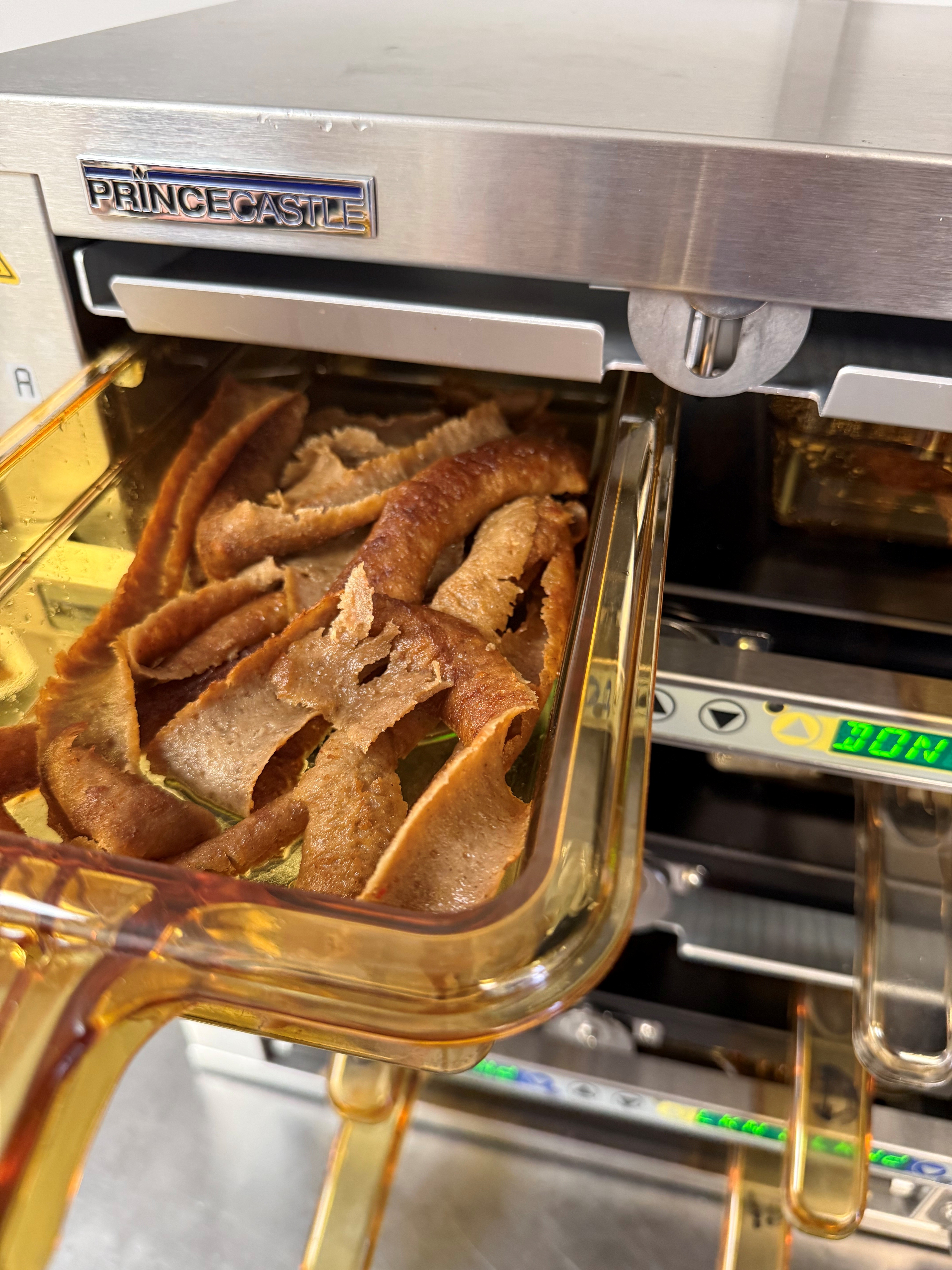
A proper hot holding cabinet is built to hold solid food at a precise temperature, rather than making a water bath do a job it was never meant for. Something like the Prince Castle hot holding cabinet keeps moisture and texture in far better than a bain marie ever could, and the individual pot timers mean you always know exactly how long each batch has been sitting, so nothing overstays its welcome without you noticing.
In testing, kebab meat held in a Prince Castle unit at 90°C to 100°C for 1.5 hours stayed piping hot the whole time. Chicken stayed moist, doner kept its bite, and there was no real drop in quality, which is exactly what you need during a busy service.
Food Standards Agency rules say hot-held food needs to stay at 63°C or above throughout service. The Prince Castle unit has a minimum setting of 65.6°C, so it clears that requirement even on its lowest setting. One less thing to think about when you’re in the middle of a busy shift.
Doner shrinks during cooking no matter what you do afterwards, usually losing 25% to 35% of its weight to moisture loss and rendered fat. On a 10kg skewer, that’s 2.5kg to 3.5kg gone before you’ve even served a portion, and with cheaper doner (which tends to have more water and binders in it) shrinkage can hit 40%.
Once the outside of a kebab is cooked and ready to carve, usually 30 to 45 minutes after it goes on from cold, it starts drying out and overcooking if you’re not shaving it off roughly every 20 minutes. Leave it turning on the machine, and that moisture loss just speeds up. Move the carved meat into proper hot holding equipment straight away, and that process stops. It holds with barely any further shrinkage and stays in good condition until it’s served.
Worth saying upfront, a kebab machine and a hot holding unit aren’t doing the same job. The machine cooks the meat, and someone needs to keep an eye on it the whole time to make sure it’s carved at the right moment and doesn’t overcook. A hot holding unit takes over once that meat is cooked and just gets on with keeping it right, no babysitting required.
Running a kebab machine costs 28p to 43p per burner, per hour, so on a four-burner machine you’re looking at £1.12 to £1.70 an hour, plus someone’s time watching it. A four-pot Prince Castle hot holding unit runs at around 31p an hour in total, and once your meat’s in there, it looks after itself. Quality stays where it should, you’re compliant on temperature, and your staff can focus on everything else going on during service.
When meat holds properly, everything else gets easier. Portion control sorts itself out because there’s no ageing meat to work around. Customers get the same good kebab every time. Your food cost stops jumping around for reasons nobody can quite explain. It’s a small change in equipment that makes a real difference to how your kitchen runs day to day, which is exactly why so many kebab shops and takeaways are leaving the bain marie behind.
If your bain marie is holding your kebab meat back rather than helping it, it’s worth taking a proper look at dedicated hot holding equipment. Florigo’s hot holding equipment for kebab shops and takeaways is built to solve exactly this problem, keeping your meat compliant, consistent and in great condition right through service.
Get in touch with our team today to talk through the right hot holding solution for your kitchen, or to arrange a quote.
.svg)
.svg)
.avif)
.avif)
.avif)

%20(1).avif)


.avif)