Where high-heat cooking equipment, grease and oil are used every day, the risk of fire is always there. It is no surprise that many kitchen owners ask us if a fire suppression system is really necessary. Here is our honest answer, and what to think about before you decide.
In our view, yes. A busy kitchen carries a constant fire risk, and insurers increasingly expect to see a fire suppression system in high-risk cooking environments. Kitchens without one often face higher premiums, stricter policy conditions or reduced cover.
A system protects far more than your insurance position. A fire can cause serious damage to your equipment, your property and your reputation, and a suppression system is designed to stop a fire fast and prevent it from starting again.
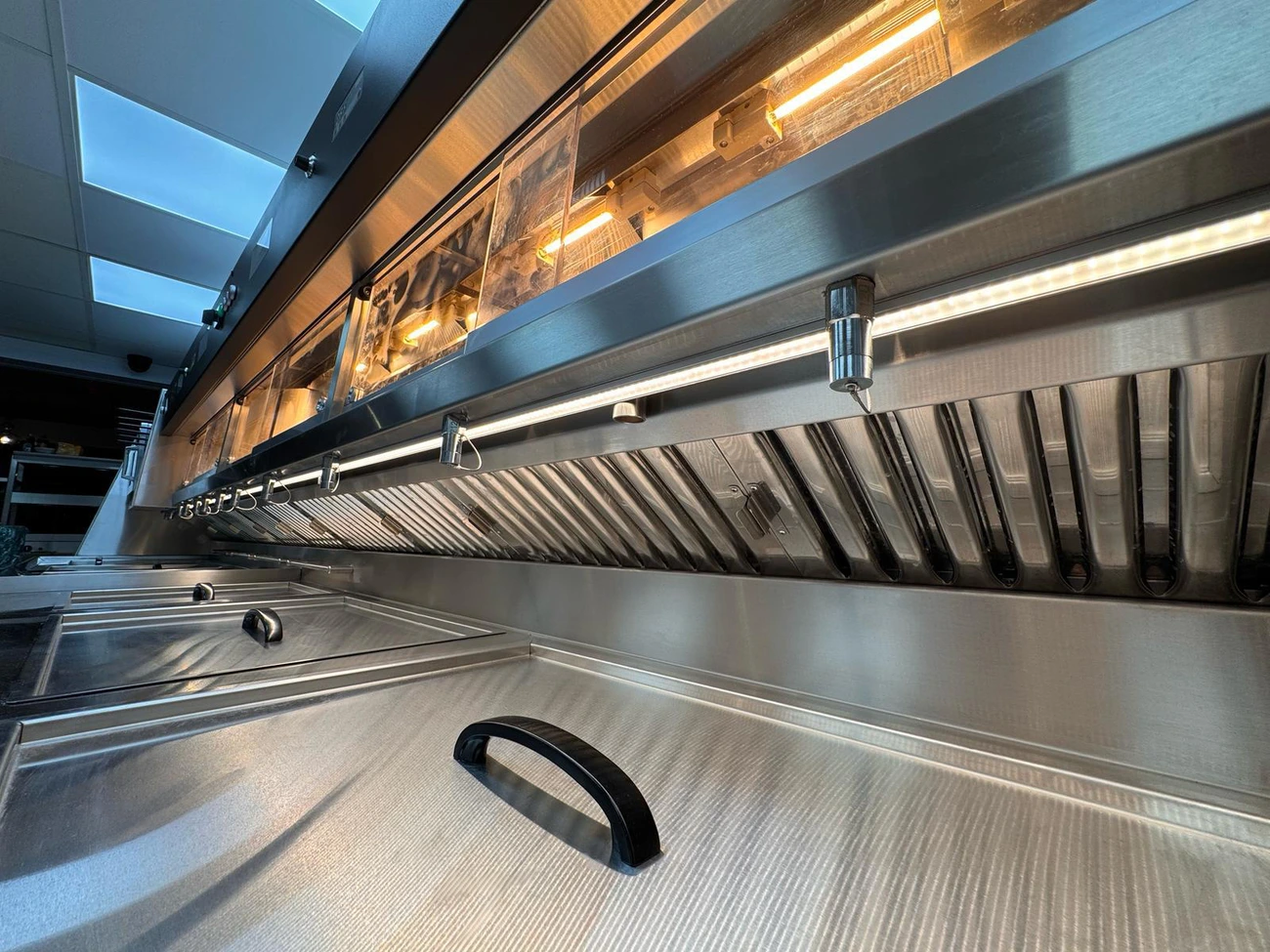
Fryers, griddles and hobs all work at high temperatures with oil and grease close by. That combination is exactly why commercial kitchen fire safety needs more than good habits. Our systems protect fryers, griddles, hobs and canopies, and they work with both gas and electric cooking equipment.
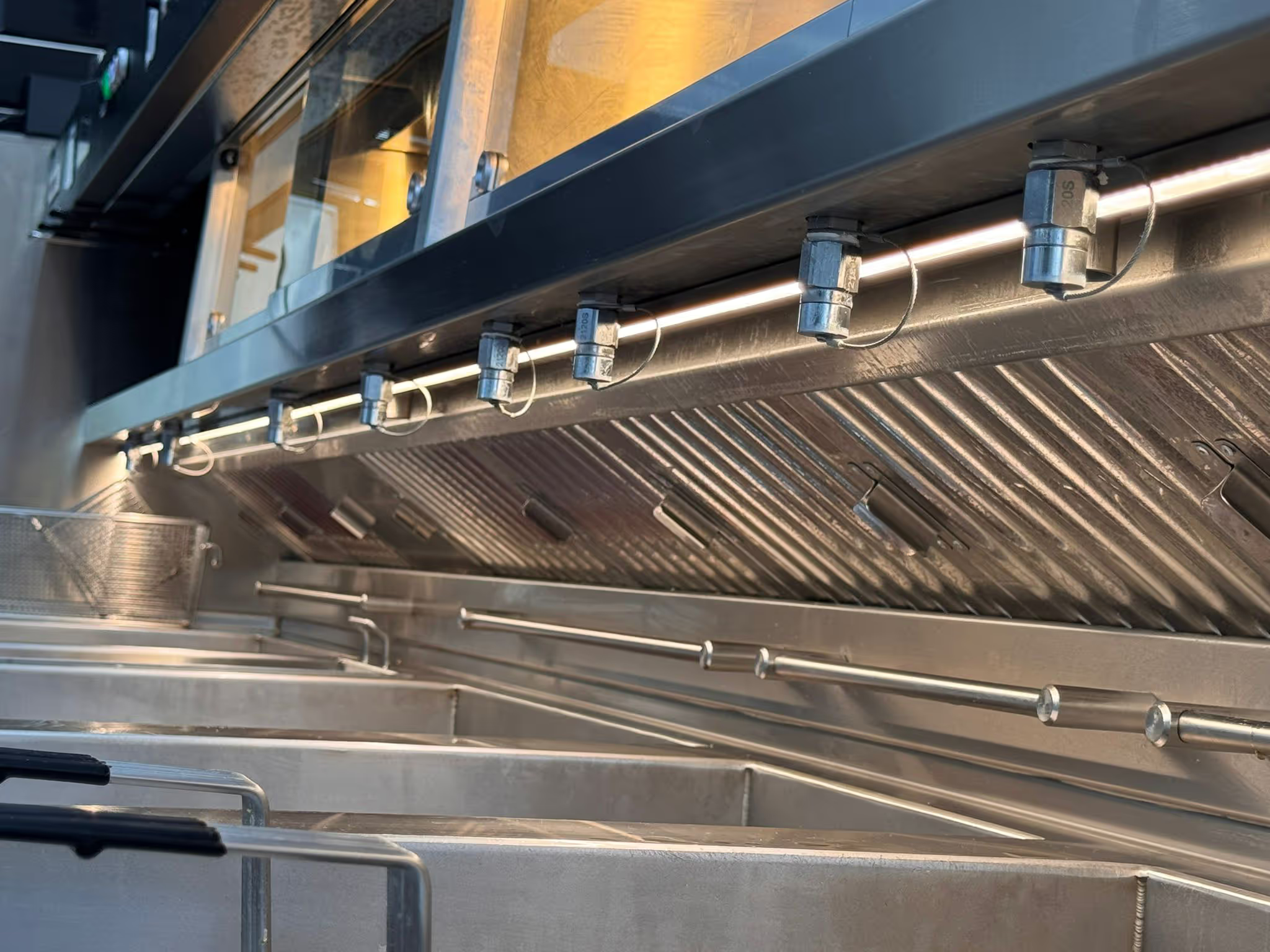
Heat sensors detect a fire automatically. Nozzles placed around your equipment then release a wet chemical agent that cools the flames and smothers grease and oil fires. Manual activation is available too, so your team can step in if they need to.
A portable fire extinguisher relies on someone spotting a fire and tackling it by hand. A fire suppression system does not wait. It detects and suppresses the fire instantly, often before it has the chance to spread.
We install ANSUL systems, widely regarded as the global benchmark for commercial kitchen fire protection. The ANSUL R-102 is designed for busy kitchens, and its specially formulated low-pH liquid quickly extinguishes grease fires and helps prevent them reigniting. The agent is also non-corrosive and surface-safe, so it is simple to recharge and clean afterwards.
If your kitchen uses gas appliances, a gas interlock system is part of the picture. It shuts off the gas automatically when a fire happens, which helps prevent leaks and explosions. It also helps keep your insurance valid.
We also install gas interlock systems, and they are a legal requirement for any commercial kitchen using gas appliances under a fire suppression setup.
A busy chip shop and a restaurant kitchen look very different, yet both use high-heat equipment with oil and grease every day. That is why restaurant fire safety deserves the same attention as any other kitchen. We work with kitchens of all sizes, including:
Every kitchen layout and fire risk is different, so we design each system around your equipment and your space instead of offering a one-size-fits-all package.
Every one of our engineers is Gas Safe registered, and we handle installations in house with no subcontractors. Not every fire suppression provider can promise the same, and it matters when gas appliances are involved.
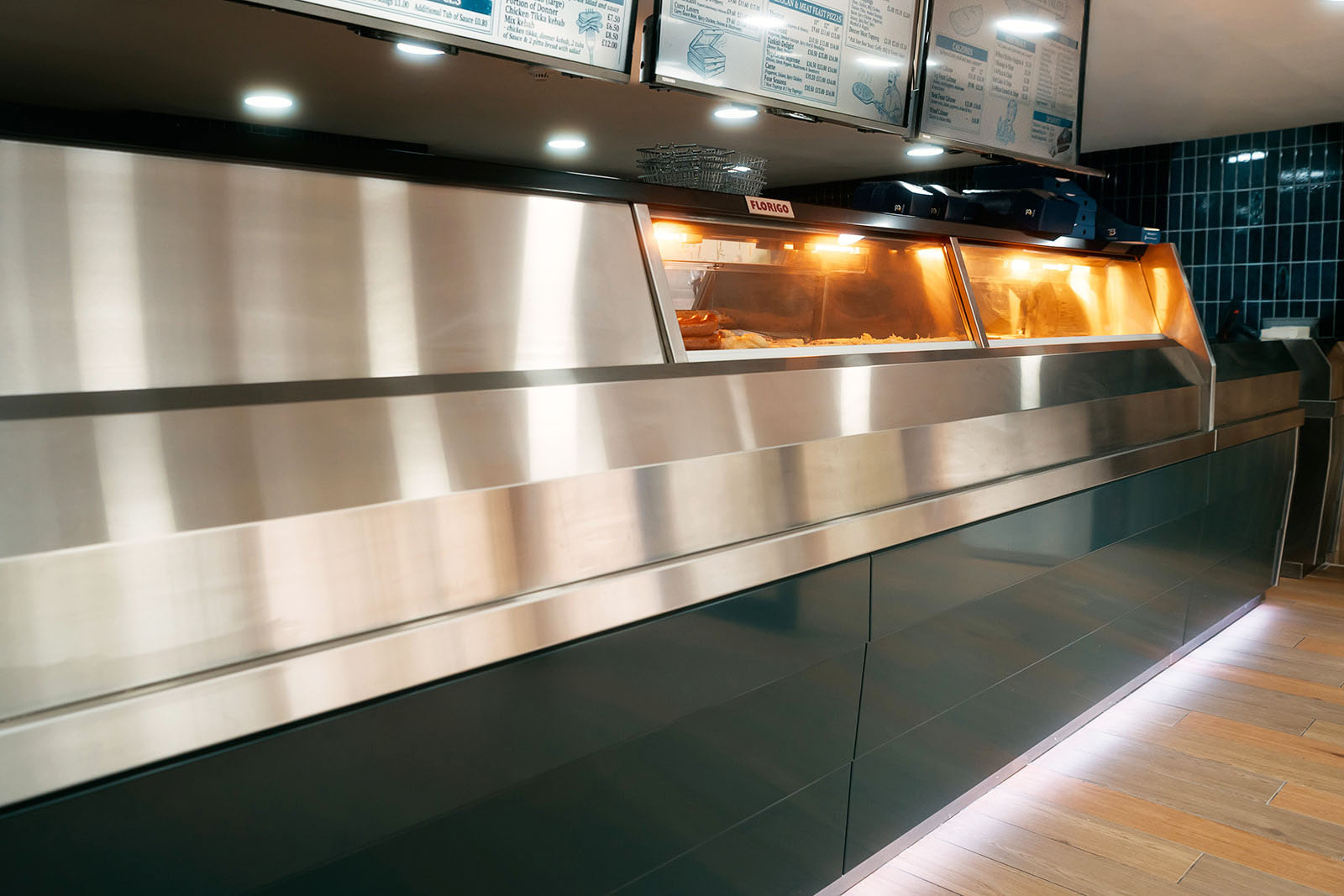
You do not need a Florigo fryer to use our service. We fit fire suppression systems into any kitchen, new or existing, working around the cooking equipment you already have. We can retrofit systems into existing ranges of any make or model with minimal disruption.
A suppression system only helps if it works on the day. We service systems every six months, checking detection lines, agent cylinders, nozzles and activation systems. Without regular servicing a system is not compliant, which could invalidate your insurance. We can service systems that another provider installed too.
We start with a site survey. Our engineers visit your premises, review your cooking equipment and recommend the best placement for your system. Then we install, test and commission it so it is ready to respond if a fire starts.
Call us on 01527 592 000, email info@florigo.co.uk or request a quote to talk through your kitchen.